


Flamingo - 1965 - Gene Davis Art Prints - 100x150 cm / 40x60″ inches | Gene Davis Poster | Gene Davis Prints
Flamingo - 1965 - Gene Davis Art Prints - 100x150 cm / 40x60″ inches | Gene Davis Poster | Gene Davis Prints
Verfügbarkeit für Abholungen konnte nicht geladen werden
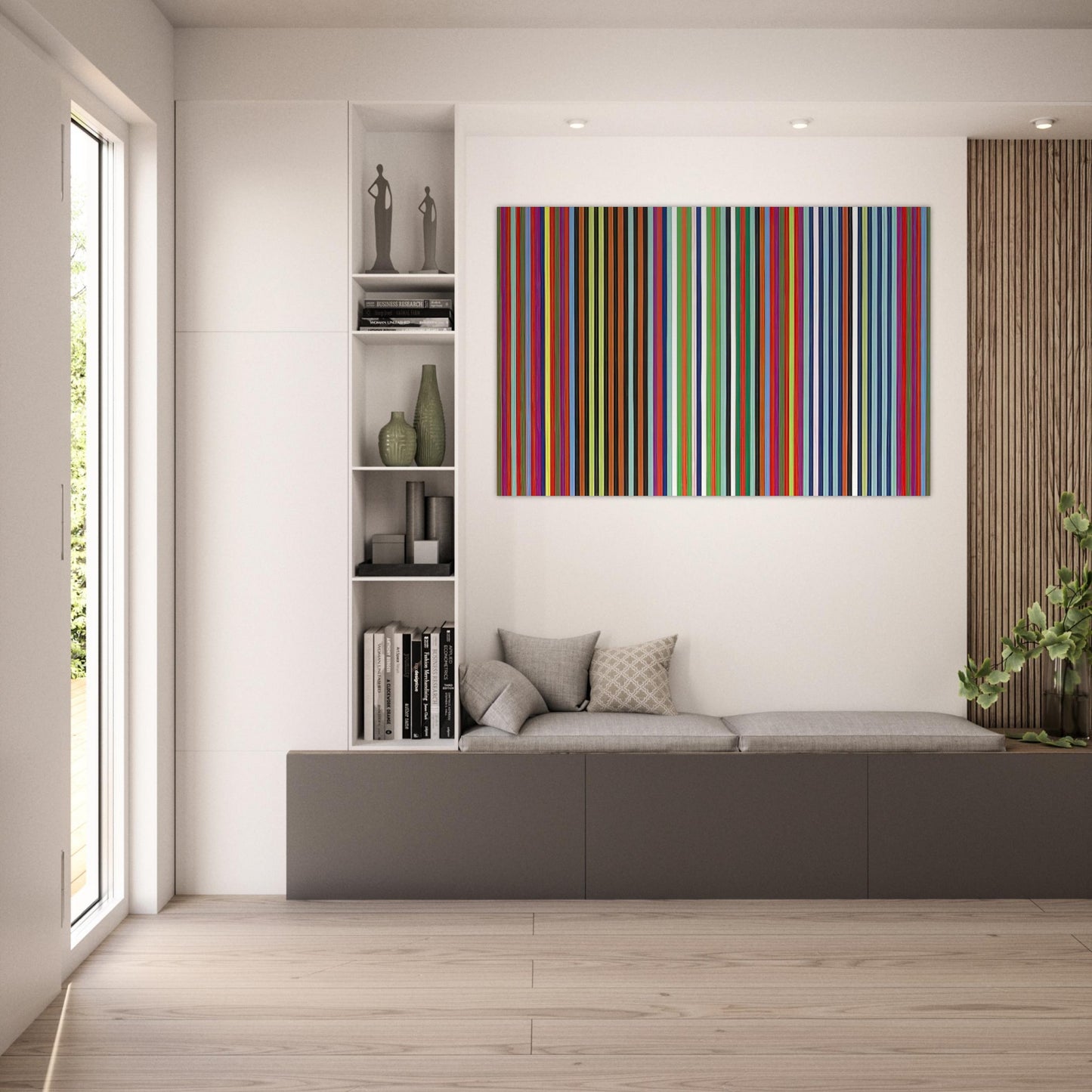
Gene Davis's Flamingo (1965) – A Stripe Symphony in Museum-Quality Archival Print
Elevate your space with Gene Davis's Flamingo (1965), a vibrant masterpiece from the pioneer of the Washington Color School. This fine art print captures Davis's signature rhythmic stripes, transforming your walls into a dynamic visual experience. As a leading figure in abstract expressionism, Davis redefined modern art with his bold use of color and form—now available as a museum-quality reproduction on RedKalion's exclusive Master's Edition archival paper.
Our 100x150 cm (40x60″ inches) print is crafted on 250 gsm (110 lb) FSC-certified, acid-free paper, ensuring longevity and sustainability. The matte, uncoated, off-white surface enhances the depth of Davis's palette, offering a tactile richness that complements the artwork's energy. Whether you're a collector or a connoisseur, this Gene Davis poster delivers an unparalleled blend of artistic heritage and archival excellence.
Davis's Flamingo is more than a painting—it's a celebration of color theory in motion. The artist's meticulous arrangement of stripes creates an optical dance, inviting viewers to lose themselves in the interplay of hues. This piece exemplifies the Washington Color School's mission to strip art down to its purest elements: color, line, and emotion. Now, you can bring this iconic work into your home with a luxury art print that honors Davis's legacy.
- Artist: Gene Davis (1920–1985), American abstract painter and Washington Color School luminary.
- Artwork: Flamingo (1965), a defining work of 1960s abstract expressionism.
- Print Quality: Museum-grade reproduction on 250 gsm (110 lb) acid-free, FSC-certified paper with a matte, uncoated finish for archival durability.
- Size: 100x150 cm (40x60″ inches), ideal for statement walls in modern interiors.
- Sustainability: Eco-conscious production using responsibly sourced materials.
RedKalion curates only the finest Gene Davis prints, ensuring each reproduction meets the highest standards of craftsmanship. Our Master's Edition archival paper—with its 0.29 mm (11.4 mils) thickness—provides a sumptuous texture that enhances the artwork's visual impact. This is not just a poster; it's a heirloom-quality print designed to inspire for generations.
Experience the joy of owning a piece of art history. Flamingo by Gene Davis is a testament to the power of color and abstraction—a timeless addition to any collection. Order your museum-quality print today and let Davis's stripes transform your space into a gallery of modern elegance.


Discover Unlimited Art Possibilities
At RedKalion, you can find virtually any artwork from any artist, available in a wide range of sizes to perfectly match your space.
If you didn’t find what you’re looking for, contact us at support@redkalion.com . We will source any artwork and produce it in any size and format you need, including art prints, posters, canvas, framed pieces, framed canvas, and more.
For dedicated art enthusiasts, we also offer handcrafted replicas of any artwork, carefully painted by highly skilled artists using traditional techniques.
For custom requests, contact us at support@redkalion.com .
What is the significance of Gene Davis's Flamingo (1965)?
Flamingo (1965) is a seminal work by Gene Davis, a leader of the Washington Color School. It exemplifies his revolutionary use of vertical stripes to explore color relationships and optical effects, making it a cornerstone of 1960s abstract expressionism.
What paper is used for this Gene Davis art print?
This Gene Davis print is printed on RedKalion's Master's Edition archival paper: 250 gsm (110 lb), acid-free, FSC-certified, with a matte, uncoated, off-white finish for museum-quality longevity.
Is the paper acid-free and archival?
Yes, our acid-free paper has a pH above 7, preventing yellowing and ensuring your fine art print remains vibrant for decades. It meets museum conservation standards.
What are the dimensions of this Gene Davis poster?
This Gene Davis poster is available in 100x150 cm (40x60″ inches), a bold size that makes a striking statement in any modern interior.
How is the print packaged and shipped?
Your museum-quality print is carefully rolled in a sturdy tube and shipped with protective packaging to ensure it arrives in pristine condition, ready to frame and display.
What makes Gene Davis's technique unique?
Gene Davis pioneered the use of vertical stripes to create optical vibrations and dynamic color interactions, a hallmark of the Washington Color School. His work blends precision with spontaneity.
Can I frame this print without glass?
While possible, we recommend framing with UV-protective glass to preserve the archival-quality print. The matte, uncoated paper is durable but benefits from protection against direct sunlight.