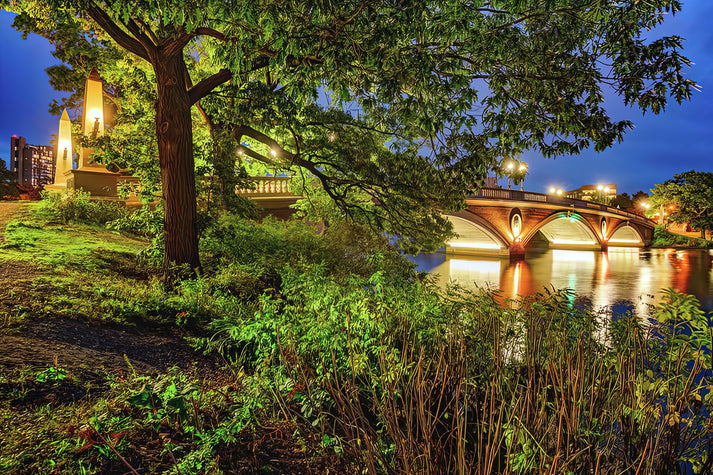

John-W.-Weeks-Fußgängerbrücke Kunstprint | Harvard University Bridge bei Einbruch der Dunkelheit | RedKalion
John-W.-Weeks-Fußgängerbrücke Kunstprint | Harvard University Bridge bei Einbruch der Dunkelheit | RedKalion
Verfügbarkeit für Abholungen konnte nicht geladen werden
Die John-W.-Weeks-Fußgängerbrücke, ein ikonisches Wahrzeichen der Harvard University, ist hier bei Einbruch der Dämmerung in einem hochwertigen Kunstdruck festgehalten. Diese Stahl- und Betonkonstruktion, entworfen vom Architekten John W. Weeks und fertiggestellt 1927, verbindet den Harvard Yard mit dem Charles River. Ihre grazilen Bögen und industrielle Eleganz werden durch das Abendlicht weich gezeichnet, was eine Studie im Kontrast zwischen Technik und Atmosphäre schafft.
John-W.-Weeks-Fußgängerbrücke: Architektonischer und historischer Kontext
Benannt nach dem Senator aus Massachusetts, der sie finanzierte, verkörpert die Brücke den frühen Beaux-Arts-Stil des 20. Jahrhunderts. Ihre funktionale Form mit filigranen Geländern und steinernen Widerlagern spiegelt eine Zeit wider, in der Infrastruktur als öffentliche Kunst galt. Dieser Druck hebt das Zusammenspiel von Schatten und Struktur hervor, während das Tageslicht schwindet.
Künstlerische Details des Harvard-Brücken-Drucks
Die Komposition betont die lineare Geometrie der Brücke vor einem Dämmerungshimmel. Feine Tonabstufungen im Druck zeigen die Textur des gealterten Stahls und die reflektierende Oberfläche des darunterliegenden Flusses. Es ist eine nuancierte Darstellung eines historischen Ortes, die architektonische Präzision mit poetischer Stimmung in Einklang bringt.
Druckspezifikationen & Materialien
- Verfügbare Größen: 75×100 cm / 30×40″, 40×50 cm / 16×20″, 21×29,7 cm / 8×12″
- Papierfinish: Matt, ungestrichen, natürliches Weiß (cremeweiß)
- Säurefrei: pH-Wert über 7 zur Vermeidung von Vergilbung im Laufe der Zeit
- Papiergewicht: 250 g/m² (110 lb) | Dicke: 0,29 mm (11,4 mils)
- Nachhaltiges Papier: FSC-zertifiziert
Dieser Kunstdruck der John-W.-Weeks-Fußgängerbrücke von RedKalion bietet eine museumswürdige Reproduktion, ideal für Bewunderer des architektonischen Erbes Harvards. Unsere archivierungstauglichen Standards sorgen dafür, dass er ein bleibendes Denkmal für dieses technische Wahrzeichen bleibt.
```

Discover Unlimited Art Possibilities
At RedKalion, you can find virtually any artwork from any artist, available in a wide range of sizes to perfectly match your space.
If you didn’t find what you’re looking for, contact us at support@redkalion.com . We will source any artwork and produce it in any size and format you need, including art prints, posters, canvas, framed pieces, framed canvas, and more.
For dedicated art enthusiasts, we also offer handcrafted replicas of any artwork, carefully painted by highly skilled artists using traditional techniques.
For custom requests, contact us at support@redkalion.com .
What is the John W. Weeks Footbridge?
The John W. Weeks Footbridge is a historic pedestrian bridge at Harvard University, built in 1927 and named after Senator John W. Weeks. It connects Harvard Yard to the Charles River, featuring Beaux-Arts design with steel arches and stone details.
What paper is used for this fine art print?
We use 250 gsm, FSC-certified, acid-free paper with a matte finish. This premium material ensures color accuracy and prevents yellowing, making it suitable for archival display of the Harvard bridge print.
How is the print shipped and packaged?
Prints are shipped flat in sturdy, protective packaging to prevent damage. We offer global shipping with tracking, and delivery times vary by location for this John W. Weeks Footbridge art.
How long will the print last without fading?
With acid-free paper and archival inks, this print resists fading for decades under normal indoor conditions. Avoid direct sunlight to preserve the dusk tones of the Harvard University bridge scene.
Who designed the John W. Weeks Footbridge?
The bridge was designed by architect John W. Weeks and completed in 1927. It reflects Beaux-Arts influences, combining functional steel construction with elegant architectural details characteristic of its era.
What makes this bridge significant at Harvard?
It's a key pedestrian link and historical landmark, symbolizing early 20th-century infrastructure as public art. The bridge's design integrates with Harvard's campus aesthetics, serving both practical and symbolic roles.