


A Perfect World - 1993 - Peter Halley Art Prints - 100x150 cm / 40x60″ inches | Peter Halley Poster | Peter Halley Prints
A Perfect World - 1993 - Peter Halley Art Prints - 100x150 cm / 40x60″ inches | Peter Halley Poster | Peter Halley Prints
Kan beschikbaarheid voor afhalen niet laden
A Perfect World (1993) by Peter Halley – Museum-Quality Archival Print
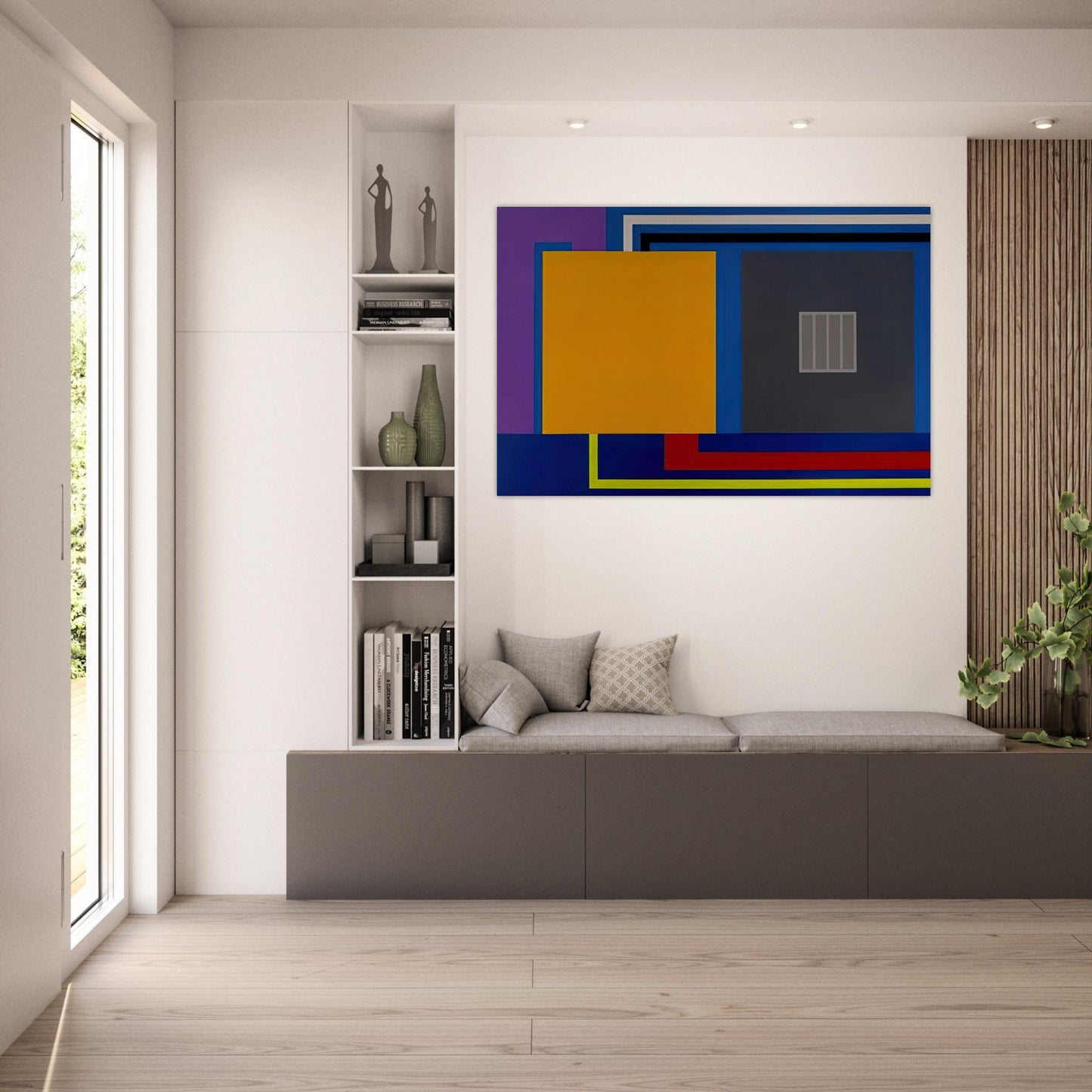
Elevate your space with Peter Halley’s A Perfect World (1993), a defining work of Neo-Geo abstraction that redefined contemporary art in the 1980s and 1990s. This fine art print captures Halley’s signature geometric rigor, vibrant hues, and conceptual depth, offering a bold statement for collectors and design enthusiasts alike.
Rendered on RedKalion’s Master’s Edition archival paper, this museum-quality reproduction ensures unparalleled fidelity to the original. Our 250 gsm (110 lb), acid-free, FSC-certified paper—matte, uncoated, and off-white—delivers a luxurious tactile experience while preserving the artwork’s chromatic intensity. With a thickness of 0.29 mm (11.4 mils), it resists warping, yellowing, and degradation, guaranteeing a print that endures for generations.
Halley’s A Perfect World is more than a visual spectacle; it’s a critique of modernist utopianism, where rigid grids and electric colors evoke the alienation of urban infrastructure. The 100x150 cm (40x60″) format immerses viewers in the artist’s geometric universe, making it ideal for minimalist interiors, corporate spaces, or contemporary galleries.
As the premier curator of Peter Halley prints, RedKalion ensures every detail—from ink saturation to paper texture—honors the artist’s vision. Whether you’re a seasoned collector or a first-time buyer, this archival-grade reproduction bridges the gap between gallery-quality art and accessible luxury.
- Artist: Peter Halley (American, b. 1953)
- Artwork: A Perfect World (1993)
- Paper: Master’s Edition archival paper (matte, uncoated, off-white, 250 gsm)
- Size: 100x150 cm / 40x60″ inches
- Longevity: Acid-free, pH-balanced, FSC-certified for sustainability
Own a piece of art history—where precision meets passion, and every print is a testament to RedKalion’s commitment to excellence.


Discover Unlimited Art Possibilities
At RedKalion, you can find virtually any artwork from any artist, available in a wide range of sizes to perfectly match your space.
If you didn’t find what you’re looking for, contact us at support@redkalion.com . We will source any artwork and produce it in any size and format you need, including art prints, posters, canvas, framed pieces, framed canvas, and more.
For dedicated art enthusiasts, we also offer handcrafted replicas of any artwork, carefully painted by highly skilled artists using traditional techniques.
For custom requests, contact us at support@redkalion.com .
What is the significance of A Perfect World by Peter Halley?
A Perfect World (1993) is a seminal Neo-Geo artwork critiquing modernist ideals. Halley’s geometric abstraction uses vibrant colors and rigid grids to symbolize urban alienation and technological control, making it a cornerstone of contemporary art.
What paper is used for this Peter Halley print?
This print uses RedKalion’s Master’s Edition archival paper: matte, uncoated, off-white, 250 gsm (110 lb), acid-free, and FSC-certified for sustainability and longevity.
Is this print acid-free and archival?
Yes. Our acid-free, pH-balanced paper (pH above 7) prevents yellowing and degradation, ensuring your Peter Halley print remains vibrant for decades.
What are the dimensions of this Peter Halley poster?
This print is available in 100x150 cm (40x60″ inches), offering a bold, immersive presence ideal for modern interiors or gallery walls.
How is the print shipped, and what are the delivery times?
We ship Peter Halley prints in sturdy, protective tubes via tracked courier. Delivery typically takes 5–10 business days, depending on your location.
Can I frame this print immediately upon arrival?
Yes. The 250 gsm, uncoated paper is designed for easy framing. We recommend using acid-free mats and UV-protective glass to preserve the print’s archival quality.
What makes Peter Halley’s technique unique?
Halley’s Neo-Geo style blends geometric abstraction with industrial motifs. He uses Day-Glo acrylics and precise grids to explore themes of isolation and connectivity in modern society.