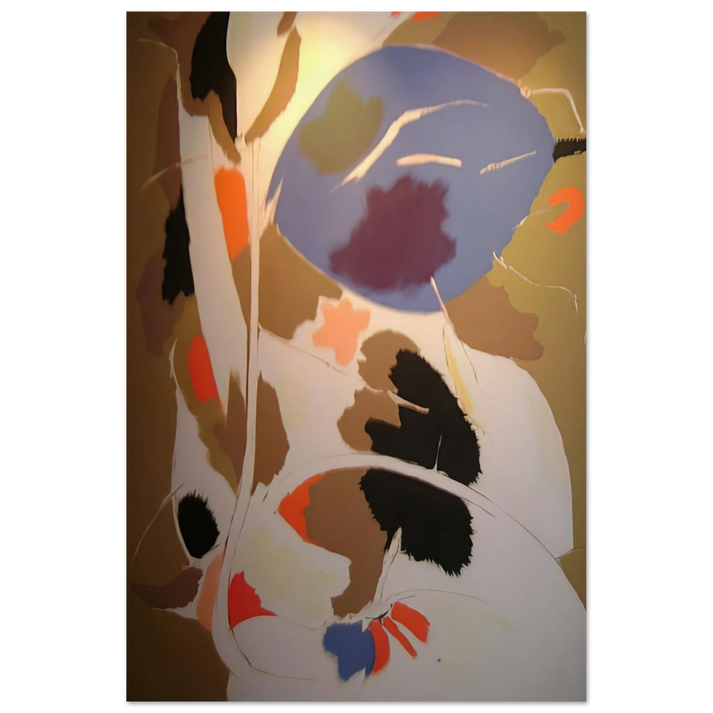


Branches - 1955 - John Ferren Art Prints - 100x150 cm / 40x60″ inches | John Ferren Poster | John Ferren Prints
Branches - 1955 - John Ferren Art Prints - 100x150 cm / 40x60″ inches | John Ferren Poster | John Ferren Prints
Kan beschikbaarheid voor afhalen niet laden
John Ferren’s Branches (1955): A Masterpiece of Abstract Expressionism, Reborn in Museum-Quality Archival Splendor
Step into the luminous world of John Ferren’s Branches (1955), a radiant exemplar of mid-century Abstract Expressionism that pulses with the raw energy of nature distilled into pure form. Ferren, a virtuoso of color and light, crafted this work during his Parisian sojourn—a period when he absorbed the avant-garde spirit of Europe while forging his own path as a pioneer of American abstraction. Branches is not merely a painting; it is a symphony of organic rhythm, where sinuous lines and vibrant hues coalesce into a dynamic meditation on growth, movement, and the sublime.
This fine art print is a museum-quality reproduction of Ferren’s original, meticulously rendered on RedKalion’s Master’s Edition archival paper—a surface so sumptuous, it rivals the tactile richness of the artist’s own canvas. Our off-white, uncoated matte paper, weighing 250 gsm (110 lb) with a thickness of 0.29 mm (11.4 mils), ensures that every brushstroke and nuance of Ferren’s hand is preserved with breathtaking fidelity. The paper’s acid-free composition (pH above 7) guarantees that your print will remain vibrant and unblemished for generations, resisting the yellowing and degradation that plagues lesser reproductions.
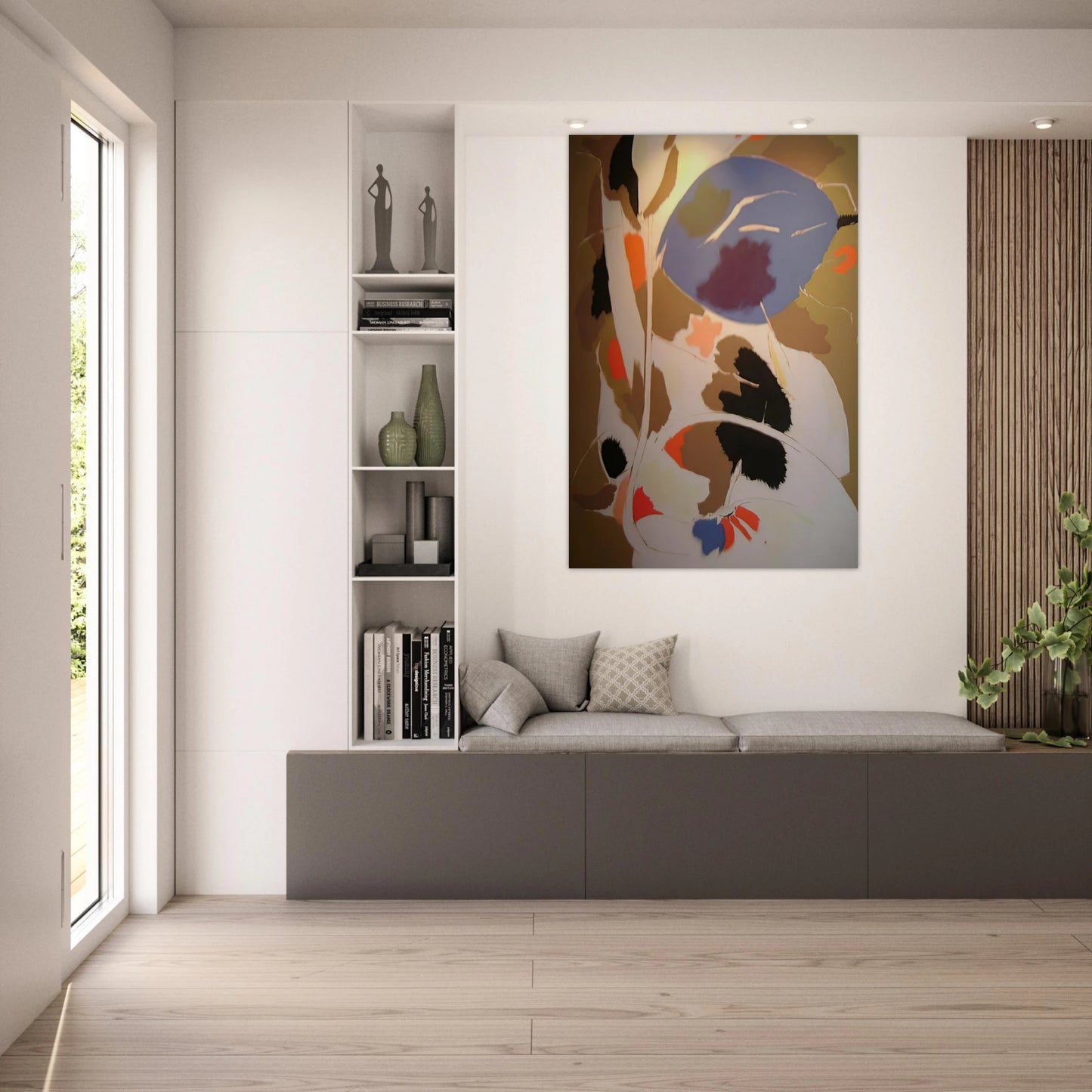
Measuring 100x150 cm (40x60″ inches), this large-format print commands attention, transforming any space into a gallery-worthy sanctuary. Whether displayed in a sunlit living room, a minimalist office, or a contemporary loft, Branches infuses the environment with the same bold, lyrical energy that defined Ferren’s era. The FSC-certified, sustainable paper reflects RedKalion’s commitment to both artistic excellence and environmental stewardship—because true beauty should never come at the earth’s expense.
Ferren’s technique in Branches is a masterclass in controlled spontaneity. Unlike the gestural frenzy of his contemporaries like Pollock or de Kooning, Ferren’s approach was one of deliberate precision, layering translucent glazes to achieve a luminosity that seems to glow from within. The result is a work that feels both ancient and modern—a bridge between the organic forms of nature and the abstract language of the 20th century. When you bring this John Ferren poster into your home, you’re not just acquiring a print; you’re inviting a piece of art history to resonate with your daily life.
Elevate your space with an archival masterpiece that endures. This is not a fleeting decoration, but a legacy—crafted to inspire, to provoke, and to stand the test of time. RedKalion is your trusted curator of world-class reproductions, where every detail is honed to perfection, from the paper’s velvety texture to the precision of the color matching. Own Branches (1955), and let its timeless elegance become a cornerstone of your collection.


Discover Unlimited Art Possibilities
At RedKalion, you can find virtually any artwork from any artist, available in a wide range of sizes to perfectly match your space.
If you didn’t find what you’re looking for, contact us at support@redkalion.com . We will source any artwork and produce it in any size and format you need, including art prints, posters, canvas, framed pieces, framed canvas, and more.
For dedicated art enthusiasts, we also offer handcrafted replicas of any artwork, carefully painted by highly skilled artists using traditional techniques.
For custom requests, contact us at support@redkalion.com .
What makes this Branches (1955) print a museum-quality reproduction?
Our John Ferren Branches print is produced on Master’s Edition archival paper, featuring a 250 gsm (110 lb) weight, acid-free composition (pH above 7), and uncoated matte finish to ensure longevity, color fidelity, and a tactile experience akin to the original artwork.
How large is the 100x150 cm Branches print in inches?
The 100x150 cm John Ferren print measures 40x60 inches, making it a striking large-format fine art print ideal for statement walls in homes, offices, or galleries.
Is the paper used for this Branches print sustainable?
Yes! Our John Ferren Branches poster is printed on FSC-certified paper, ensuring it meets the highest standards of environmental responsibility without compromising on quality or archival durability.
How does the uncoated matte finish enhance the Branches print?
The uncoated matte finish of our off-white archival paper reduces glare and fingerprints while providing a luxurious, velvety texture that faithfully replicates the look and feel of Ferren’s original brushwork.
What is the expected lifespan of this archival Branches print?
Thanks to its acid-free, pH-balanced paper and museum-quality production standards, this John Ferren print is designed to resist yellowing and fading for over 100 years under proper display conditions.
How was John Ferren’s Branches (1955) influenced by his time in Paris?
Ferren’s Paris years (1950s) immersed him in European modernism, particularly the works of Matisse and Picasso. Branches reflects this influence through its bold color contrasts and fluid, organic forms, blending American abstraction with a distinctly European sensibility.
What distinguishes Ferren’s technique in Branches from other Abstract Expressionists?
Unlike the gestural spontaneity of Pollock or de Kooning, Ferren employed layered glazes and controlled brushwork in Branches, creating a luminous, almost translucent quality that evokes light and depth with remarkable precision.